Sustainability. It’s a word of currency. A word aligned with a greener future. A word that’s now certifiable as a trust mark. Essentially ambiguous, it is also a word ripe for greenwashing. While organic and biodynamic certification may attract critics, they do guarantee a minimum standard. And to generally educated consumers, they resonate. Sustainability is firmly in today’s wine industry lexicon, but what message does it send to the consumer? And are we doing enough?
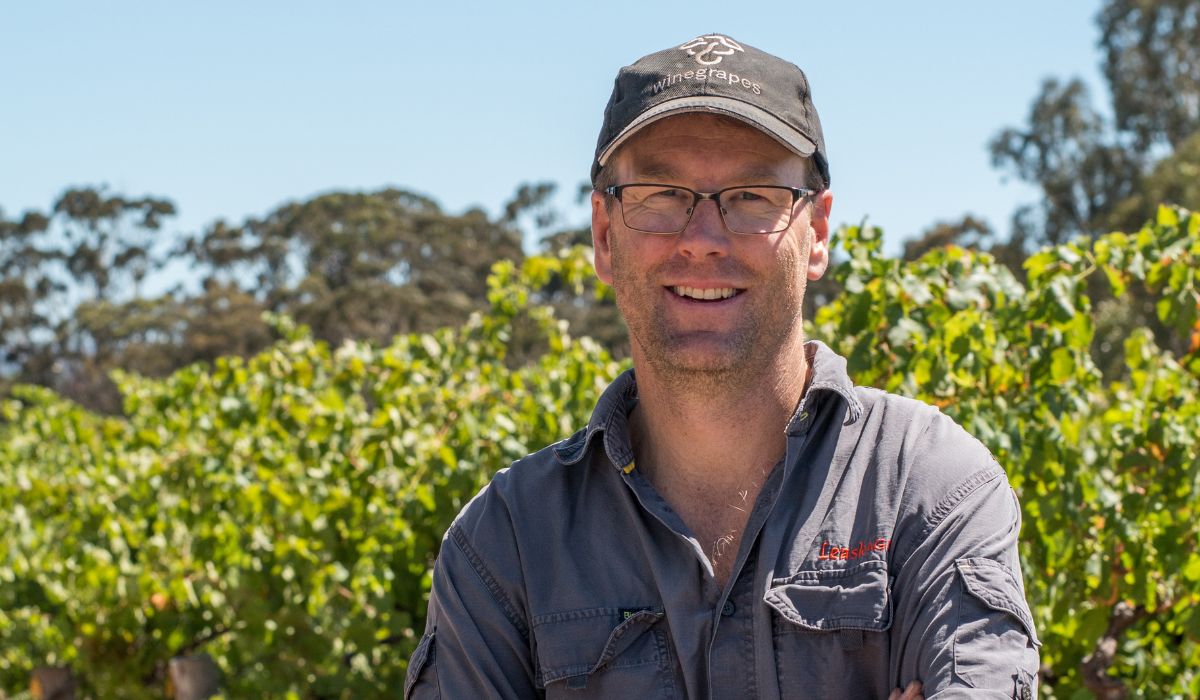
“What I think about daily is how do we have a business that is there 20, 30, 40 years into the future?” says Richard Leask, vigneron at Hither & Yon in McLaren Vale, consultant viticulturist and director at Leask Agri, and a 2019 Nuffield Scholar. “Because that's the true measure of sustainable enterprises. To get to that point, and then go again for another 30, 40 or 50 years.”
Sustainability is measured across three pillars: environmental, economic and social. Soil health, biodiversity above and below ground – and both on vineyard and non-vineyard land – climate-apt grape varieties, water management, waste reduction, renewable energy, and packaging and distribution through the whole supply chain are all critical factors. It also encompasses community benefits, the treatment of workers, down to training, inclusion in decision making, advancement, fair and ethical wages, conditions and treatment, as well as the relevance of the product produced. As generational tastes change, a wine business needs to adapt.
Sustainable Winegrowing Australia SWA, which is the adoptive – and now mainstream – version of McLaren Vale’s Sustainable Australia Winegrowing pilot program, is our key certifying body, and is managed by the Australian Wine Research Institute, Wine Australia and Australian Grape & Wine. The certification process involves yearly audits across six focus areas: land and soil; water; people and business; biodiversity; energy; and waste.
Those metrics, and their inherent complexity across varied wine businesses and regions, make for a heady mix (though some argue they don’t currently go deep enough), for both winegrowers and consumers. “Sustainability is important and will be increasingly important to the consumer,” says David Gleave MW, chairman of the UK’s Liberty Wines and owner of McLaren Vale winery Willunga 100. “But the term is imprecise and not easily understood by the consumer. Organic, on the other hand, is easily understood, even if at times it may not be the most sustainable approach.”
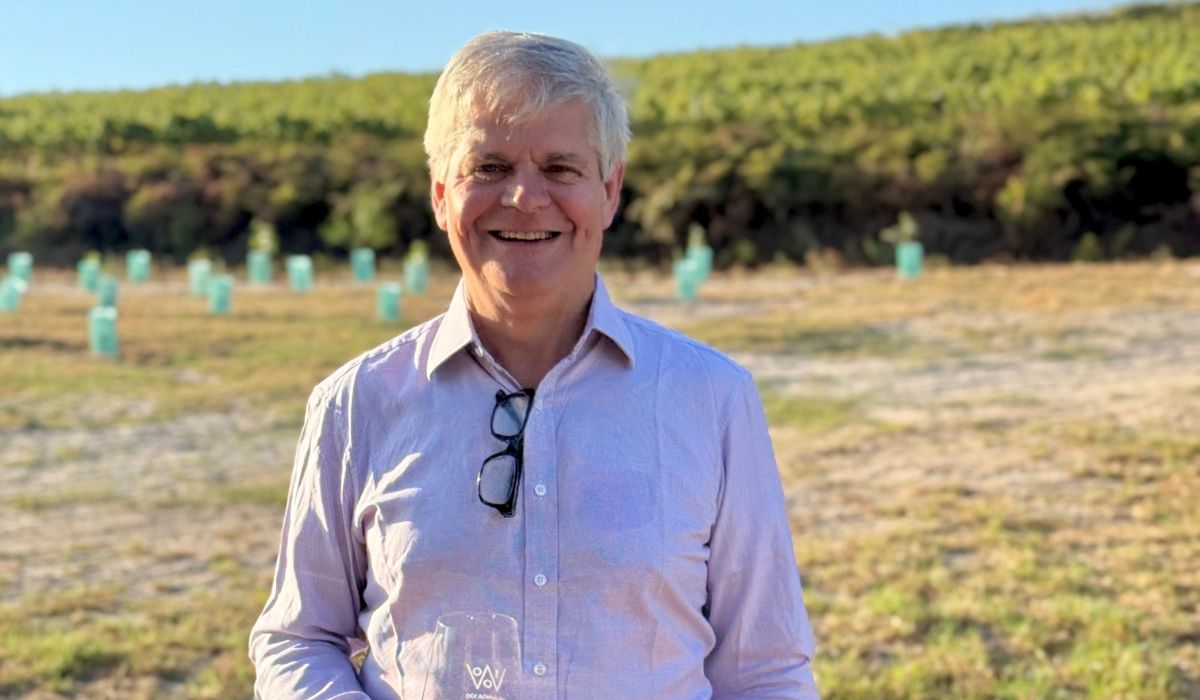
That last point is reiterated by Richard, who notes that without a truly sustainable and regenerative mindset, organic farming isn’t always enough, especially if employing regular soil cultivation that releases carbon and an over-reliance on copper to mitigate disease pressure. “Organics is intensive, and highly intensive in a variable climate. That's more carbon miles, more tractor passes, more diesel use. The consumer looks at it and says, ‘that's organic, that's fine’.”
Richard is not making an argument against organics, but rather that dogma can block progress. No matter the farming, the way to assess practices is to measure consistently over time, and then to adjust where needed. “There’s no one size fits all,” he adds. “We need as many people on board as we can. What I do is mostly transferable to other regions, but there are always nuances that don't work. Unless people in each region push the boundaries and trial and tinker, they’re never going to work properly in every region, which is what we need.”
It has been broadly reported that the Australian wine industry – despite, I would argue, being in the best position based on a wine diversity, quality, character and authenticity analysis – is in turmoil, both financially and in terms of international reputation. The economic strain is borne heavily at the literal ground level, with farmers under the trickle-down strain of torn up contracts, or barrels, tanks and sheds full of wine, and often both.
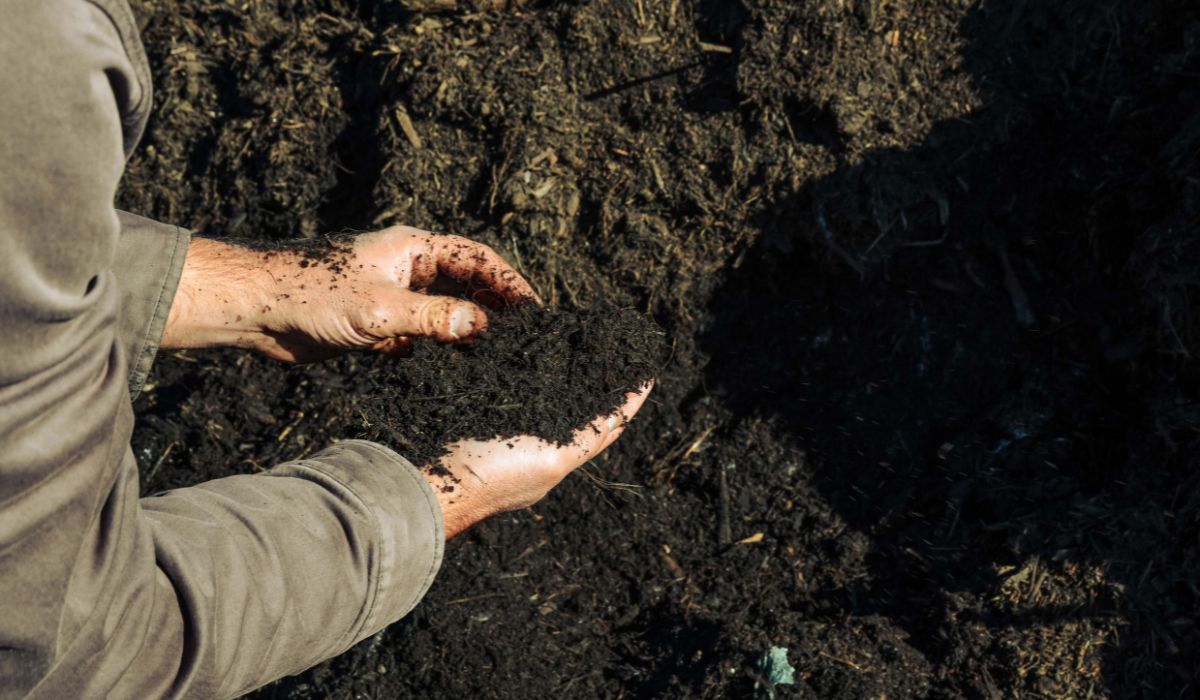
That hardship can make long-term sustainability a hard sell to growers whose focus is day-to-day survival, says Richard. “If you’re talking about microbiology and nutrient cycling and carbon cycling and competition under vine, where the best practice has been to have none for the last 100 years… their minds explode. The obvious thing is to talk about economics. We need to work out which lever to pull, and right now it is the costs saved if we stop doing some things and let other things happen. We can talk about soil microbes and carbon sequestration down the track.”
It's a step that David believes is not just economically and environmentally sound, but will also champion Australian wine around the world. “After Penfolds came out with very downbeat news, it seems to me that the future lies with producers that make vineyard wines,” he says. “Australian wine over the past few decades has been driven by working better in the vineyard and less in the winery. Working well means working sustainably… to realise that you are a custodian, and that you should pass the land on in better shape than you received it.”
That downbeat news relates to a second bet on the wine market in China, and one that hasn’t returned expected dividends. That’s not the cause of the crisis, but rather a symptom. “This is an unpalatable, awkward conversation that has been floating around by and large for the last 20 years, because we've been avoiding this through luck,” says Richard, noting that the uptick in certain markets at certain times, or the breaking of droughts and the like have kept things afloat. “This has been coming since I can remember, since the mid-2000s.”
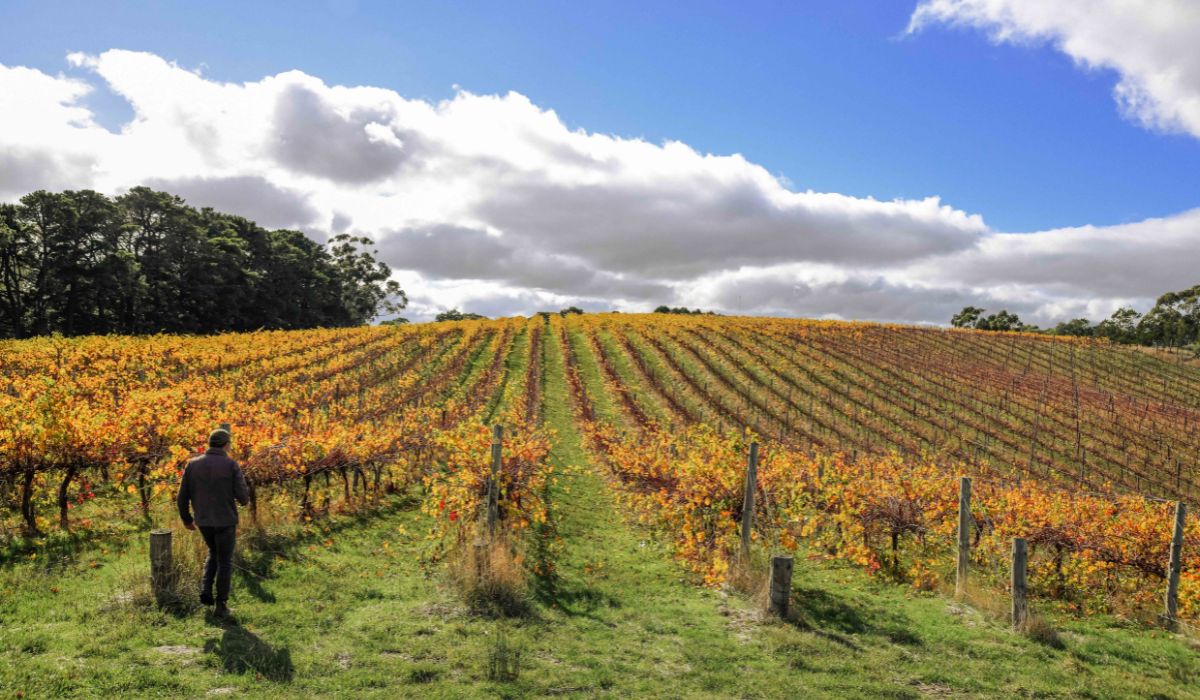
Essentially, the shape of the Australian wine industry may simply be unsustainable with our input costs and the average export market price for our wine, yet it is still a vital cog for those producers that can value add based on their brand. “If we could sell every single bottle we make in Australia, we would – simple as that,” adds Richard. “We export wine so that the business is sustainable. If we could sell every bottle in Australia at a reasonable margin… Why would we sell it anywhere else?”
Richard’s Nuffield Scholarship project piece, titled Is Being Sustainable Enough for Australian Wine? was published in 2020, with the subheading: Regenerative agriculture can redefine what is best practice viticulture. Regenerative agriculture is an approach to heal and rejuvenate the land through soil health and biodiversity, and while it does not attempt to encompass the whole rubric of sustainability, it is foundationally essential to true sustainability, and it is the building block for ongoing economic viability.
“Anything to do with soil, we need to be looking at replacing and being reparative in our mindset, because we've been farming a certain way for a long number of years. I'm not having a go at how we did it,” Richard adds, “but we need to look at how we can be better. We need to put stuff back into the system, through carbon cycling, through enhancing soil biology… If you're still looking at it from an extractive angle, then you're not going to be here in 30 years’ time.”

New Zealand’s Felton Road in Central Otago was an early adopter of regenerative and sustainable practices and has been certified organic and biodynamic for over two decades. Felton is also a member of International Wineries for Climate Action and B-Corp. “When we moved to organic farming in 2002, we saw widespread greenwashing claims like ‘we farm as organically as possible’ – meaningless!” says Felton Road winemaker Blair Walter. “You either are or you’re not. That motivated us to seek organic and biodynamic certification to separate ourselves from the greenwashing claims.”
Like Richard, Felton Road’s owner and sustainability maven Nigel Greening is no acolyte, recognising the limitations of any codified practice. Certification is about effective communication with consumers, but pushing boundaries is critical. “What truly surprises me is how disengaged much of the wine world is on climate change,” he says. “I have attended meetings, conferences and seminars discussing climate change in Australasia, Asia and Europe. I’ve listened to producers talk about rethinking varieties, irrigation, frost and storm issues, diseases… and not a single person mentions what they are doing to prevent it.”
Blair notes that sustainability claims are easy to make, potentially stifling real action that can collectively bring about meaningful change. “Everyone can recycle and reduce carbon emissions by purchasing an EV or similar action, but how committed are you?” he says. “We no longer airfreight wine to any of our customers as it is hugely carbon-emission intensive. We forwent significant sales direct to customers, as there is no ocean freight alternative.”
Accreditations may be imperfect, but David believes there is need for sustainable trust marks for the consumer. However, they ideally would be more than a symbol on a label, clearly demonstrating both individual initiatives and measurable results.
“This needs to be done via a QR code or something similar so that the consumer can, if they wish, learn what the producer has done to gain the sustainable accreditation,” he says.
A less-discussed issue in Australia – and even less-considered from a consumer perspective – is bottle weight. The UK is a leader in the field, with the Sustainable Wine Roundtable releasing a report in 2023 on reducing bottle weight, noting in the executive summary: “Various life cycle assessment studies have shown that the single biggest source of carbon in the wine industry is the bottle, most significantly the carbon emissions from the manufacturing of the glass bottle.”
That report has seen initiatives from major retailers like The Wine Society incentivising their suppliers to switch to lighter weight glass, along with alternative packaging options and a raft of other sustainable practices. Felton Road is moving to a locally made sub-400g bottle for their pinot noir and chardonnay, after a decade of one just a little over a-still-light 400g, says Nigel. “They have a very high recycled content, and they ship the bottles from their factory by sea to minimise carbon transport. Contrast that with America, where there are laws in place that deliberately make it very hard to achieve a high recycled content.”
Sustainability is an essential umbrella concept, and one that needs to be looked at not just for what is permissible under a governance structure, but what can be done better, both on a local and global level. And in respect to farming, it’s a term that Richard believes is, to some degree, outdated. “It may end up being the next greenwash word, but regenerative has a doing connotation, where sustainability feels like a holding pattern. We need to put our hand up. We need to be honest with ourselves – holding where we are is not enough. We need repair work. If we’re not putting back, then we're going backwards.”
This article first appeared in issue #82 of Halliday magazine. To receive the magazine, unlock digital access to 190,000 tasting notes, and more, become a member now.
Subscribe to the Halliday Wine Companion Podcast
Hear from some of Australia's top winemakers and industry professionals as they share their stories and insights on the Halliday Wine Companion Podcast. Listen here, or on your usual podcast platform, and remember to rate, share and subscribe so you never miss an episode.