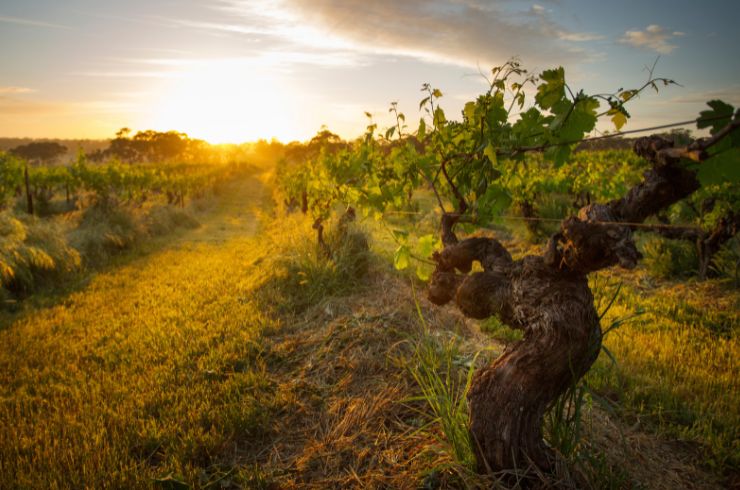
Around 30 years ago, right at the start of his career, Tim Brown helped his dad plant a vineyard on the family farm at Taradale in the Macedon Ranges. “We mucked it up horrendously,” says Tim, today one of Australia’s leading viticulturists. “We didn't know what we were doing, we put the wrong varieties in. The rows weren't straight and it was just a disaster.”
In 2020, Tim finally convinced his dad to pull out the four-hectare vineyard. At that point, he knew – had long known – that “there was nothing I could do to make it work”.
“It was a hard decision, because these were 30-year-old vines,” he says. “But my goal was always to put the viticulture practice that I believed in into my own land, which I knew I couldn’t do with that vineyard. I thought, 'I need to be true to what I believe and start again.' So that's what we did. We pulled it out and started again.”
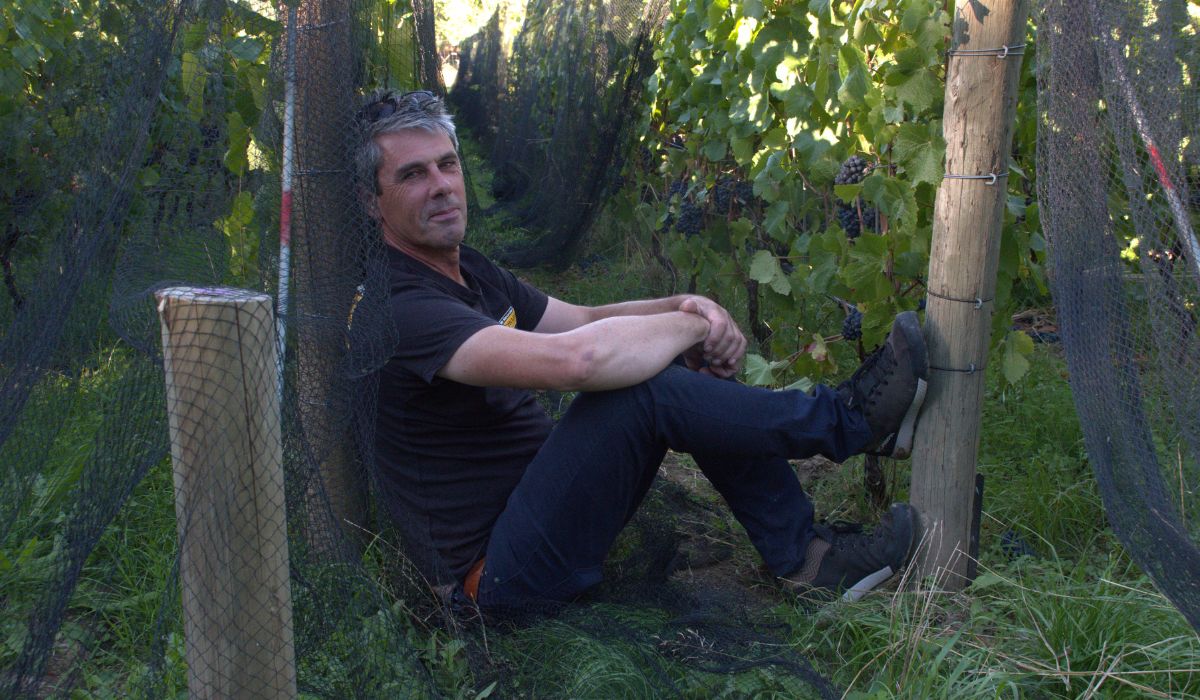
As well as a highly sought-after viticultural consultant, Tim is a pioneer of high-density planting in Australia. He first travelled to Burgundy in 2008 to learn how to translate the practice to our conditions, and in the years since, he’s been behind some of the country’s most notable high-density vineyards, including Bindi’s Darshan and Block 8, Ten Minutes by Tractor, William Downie and Elanto.
There are many benefits to high-density planting. Beyond increasing agricultural productivity by maximising space, the practice promotes deeper rooting, improves the canopy structure, and forces the vines to compete for resources, which results in smaller, more concentrated berries. "It's like the bonsai effect," Tim says. Essentially, it means “you can make better wine sooner”.
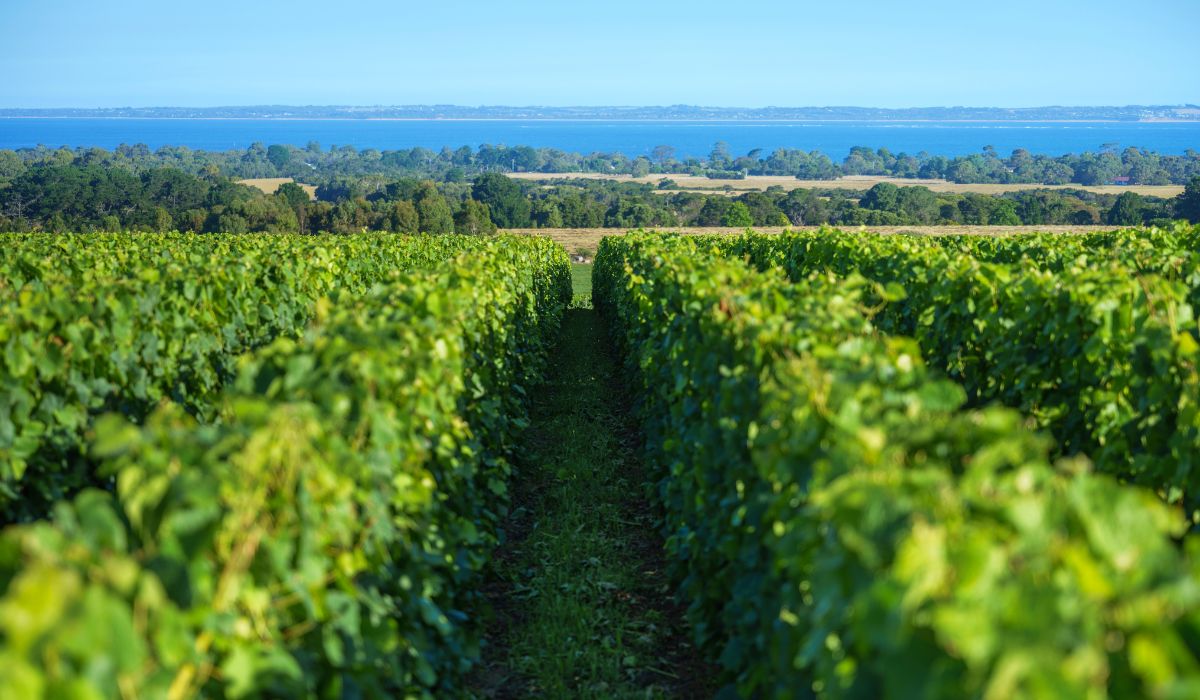
So, when the time came to replant the Taradale vineyard, high-density was an obvious choice. In ’21, at a density of 15,000 vines p/ha, he planted pinot noir and aligoté, followed by chardonnay a year later. Just half a hectare in total is under vine (of which pinot noir makes up around two-thirds) – a scale which allows Tim “to do everything myself, the shoot thinning, pruning, everything.”
He's also not afraid to say he irrigates. “One of the things about working in viticulture is that you see a lot of things you really like and a lot of things that you don't like and don't work,” he says. “I know that vineyards with healthy, functioning leaves make better wine.”
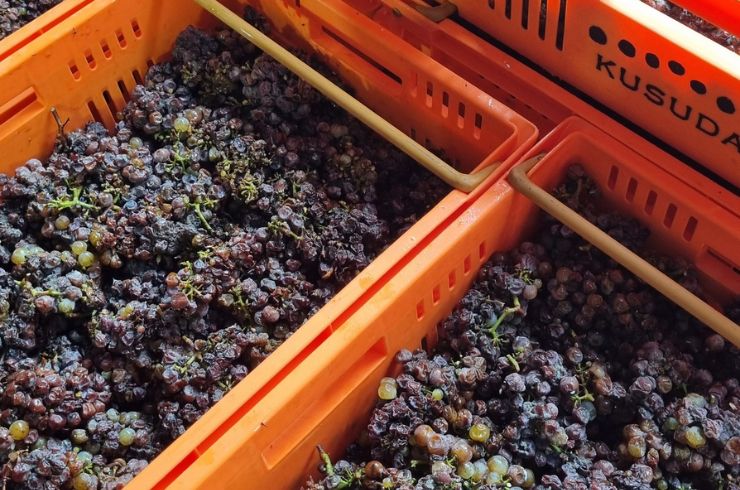
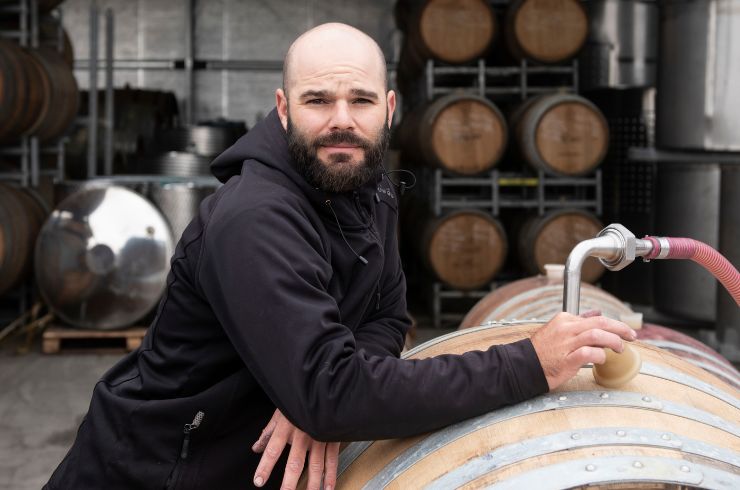
Although viticulture was the original goal, making wine was the consequence. In 2024, just three years after planting, Tim, with guidance from Michael Dhillon at Bindi, produced the first pinot noir and aligoté under his brand-new label, De La Bêche, a name chosen for its dual meaning – De La Bêche is both a street in Taradale and translates from French to “off the spade”. In 2025, he added chardonnay to the line-up.
“The most rewarding part is that, unlike in my day job as a viticulturist, where there's a slight disconnect to the end product, we're completely invested in the end product now. It's been amazingly satisfying,” Tim says.
It helps, no doubt, that the response to the debut release, comprising the 2024 Pinot Noir, 2025 Chardonnay and 2025 Aligoté (there wasn’t enough 2024 Aligoté made for it to properly hit the market), has been “unbelievable”.
“I couldn't have asked for a better intro," he adds. "Maybe it’s beginner's luck, but I think in the end it's what's in the glass."
See how Jane Faulkner scored the wines below.
Sign up to view these tasting notes and ratings
By becoming a member of Wine Companion, you'll have access to the largest database of wines in Australia.
Subscribe to the Halliday Wine Companion Podcast
Hear from some of Australia's top winemakers and industry professionals as they share their stories and insights on the Halliday Wine Companion Podcast. Listen here, or on your usual podcast platform, and remember to rate, share and subscribe so you never miss an episode.
Latest Articles
-
Wine Lists
International-fiano-day
11 hours ago -
News
Bilancia, maker of New Zealand's best red wine, celebrates 30 vintages
1 Oct 2026 -
Wine Lists
Explore five trophy-winning wines from the Barossa and Orange wine shows
1 Oct 2026 -
Wine Lists
Seven wines that are $50 or under that deserve your attention
24 Sep 2026