Amongst the emerging and avant-garde sect of winemakers around Australia, there are certain sites that seem to tick boxes for accessibility of fruit, general interest and a canvas for aspirational winemaking. Places like Hoffmann-Dallwitz’s vaunted vineyard in Barossa Valley, the biodynamic offering from Yangarra in McLaren Vale, Chalmers’ kaleidoscope of varieties planted across their sites in Heathcote and Murray-Darling, Shay’s Flat and Landsborough vineyards in Central Victoria, Ricca Terra Farms and Bassham’s in Riverland, and Swinney’s bush-vine-laced plots in Frankland River.
These vineyards have been fertile ground for progressive winemaking approaches and fine winemakers alike. New South Wales has seemingly lagged with focal points of similar quarry. Vineyards that have created a sense of community or at least offered up an abundance of fruit for winemakers seeking diversity and ease of access are relatively scarce. There is, of course, track record of those that share their grapes: Freeman of Hilltops comes to mind, as does Topper’s Mountain (when fruit is obtainable) in New England, Tamburlaine, and Becker in the Hunter Valley, too.
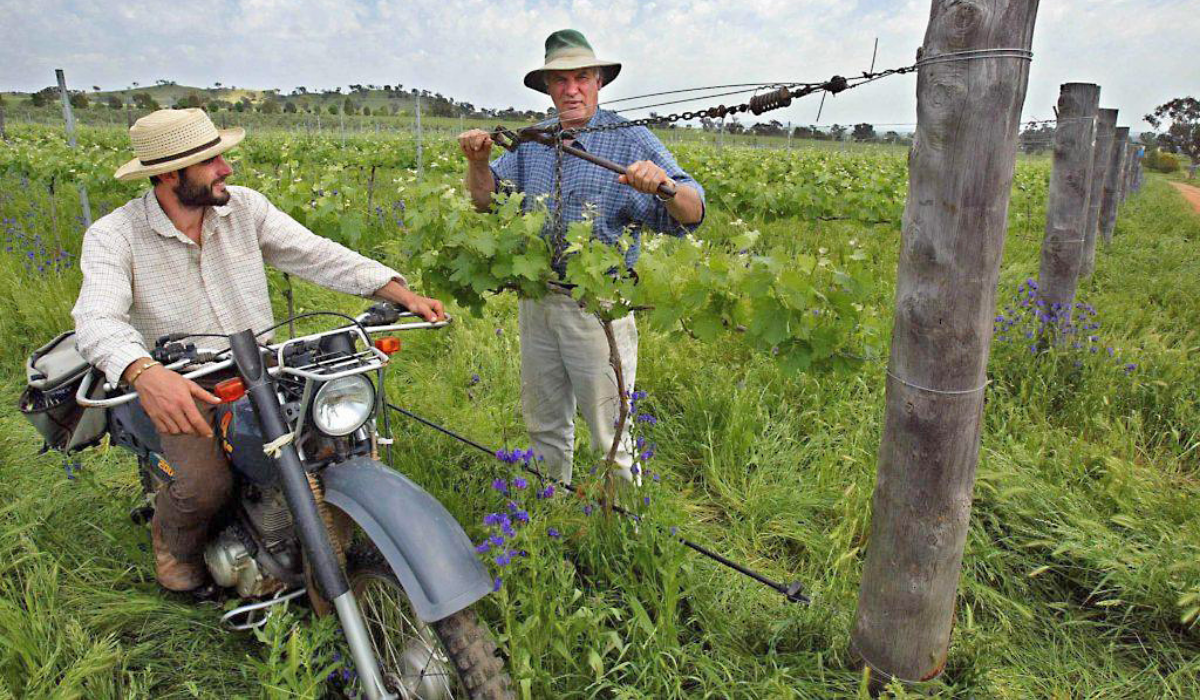
Casting a net over the progressive winemaking sect of New South Wales winemakers, Rosnay vineyard, located near Canowindra in the Central Ranges, has been some of the most fertile ground. Rosnay seems to have become a place of pilgrimage, a home for eccentric spirits and expressive wines, while also being a bit of a commune, in various senses of that word. A gathering place, a creative home, a location for learning and a kind of kin to more spiritual things that come about with deep connection to land.
.ashx?h=700&w=1200&hash=19AB641FDB4F74AA22C045599CF1DA7E)
Richard and Florence Statham, and their sons, planted the site in 1997. The speculative location sits outside marquee wine region territory, but the mix of sandy granite, quartz and clay soils must have spoken fluently of potential. The vineyard, organic since day one, has never known the touch of chemical sprays or synthetic fertilizers. The Stathams have made Rosnay one of NSW’s enduring certified-organic estates, producing vines and olives grown to living soil practices. They embrace biodiversity, with grazing sheep and green manures essential factors in the terroir’s theatre.
For their own wines, under the Rosnay Organic label, the Stathams have long taken a quiet approach. Their offering metered by winemaking application that sees wild fermentation engaged, no additives used, and a rejection of filtering and fining, plus very low or no sulphur regime in putting the wines to bottle. Resulting wines have shown over the years with elements of rustic charm, savouriness, wild streaks and quixotic personality, though current releases feel more trimmed and toned.
This is something current custodian Sam Statham says is a direct response to the influences of winemakers who not only source fruit from the vineyard but make wine alongside the Stathams in their winery shed. “It’s such a benefit to have these winemakers taking interest in us,” Sam says. “Not only is it a lot of fun, but we learn a lot from observing others and bringing on board elements of their production knowledge. It’s helped fine-tune things a bit out here.”
Naturally sparkling wines under the moniker of ‘pét-nats’ now come with a more assured fizz, a crackle of minerally acidity, and feel well balanced in fruit, savouriness and yeasty inflection. Vermentino seems to be a rising star, a curious seaside white feel despite the landlocked location, with sea spray and vibrant citrus leading both the standalone expression, and in more textural, puckering blends. Red wines continue to be hemmed with ferrous rusticity, but the uplift in juicy acidity and faint minerality shows deftly in current releases. More to come, of course, as influences stick.
.ashx)
It was in 2017 when aspiring winemakers Simon Jones and Charlie O’Brien came as conceptualists to Rosnay. Their Chateau Acid project is forged from small parcels from the vineyard, with a focus on vermentino, chardonnay, grenache and shiraz. Skin-fermented wines join bright, crunchy-textured reds, deeply flavoured and savoury rosés, and pure white wines that speak of textural nuance and distinct minerality. Their wines are a standard bearer for edgy, expressive winemaking in New South Wales and can be seen as a catalyst for the ecosystem of winemakers to follow.
Genie Wines, the work of Jean-Marie Taylor, joined the fray with the first release in 2021. Jeanie worked alongside the now-defunct Benson and the Mooch winemakers, based in Wollongong, but found early success with well-balanced skin-fermented chardonnay, and has flourished with pétillant naturel wines in varying shades, vivacious, lighter toned reds and skinsy pinot gris that feels kindred to savoury rosé styles in its make up.
Genie now calls the Rosnay winery home for production, and Sam Statham reiterates the benefit of collaboration: “Having Jeanie in the winery is opening up a lot of new avenues for our wines in terms of technique and personality,” he quips.
Among the wider scene are makers whose presence at Rosnay’s fringes, whether they vinify there, source fruit, or simply commune with the place. Pride of Lunatics toil on their own regenerative, mixed agriculture farm, also in Central Ranges, but supplement what they grow with fruit from Rosnay. Their Farmhouse Fizz combines chardonnay and vermentino in a simple, frothy, hazy apple juice-laced pét-nat grown by the Stathams.
Front Left Wines is new to source from Rosnay. Based in Mudgee, the wines from this striking producer are very fine tuned, sleek and pure. Lighter weight reds, rosé and, again, textural white wines are the staple. Blue Mountains-based Frankly, This Wine Was Made By Bob, has also parlayed Rosnay fruit into juicy, vivacious and unadulterated offerings.
Hopeless Thoughtful is a garagiste producer making wines on the edge: zesty, tangy, ultra-light weight offerings that veer from eccentric orange wines to nutty, savoury pink wines and across to sloshy, loose-knit reds. The curiously named Ur 1st Luv (formerly Sally Rainbows) likewise has used fruit from Rosnay, producing evocative and pure expressions with selected parcels from the site.
These makers seem to share a belief that wine is an art as much as agriculture and winemaking application. The wines seem to breathe life into a mantra that allows room for unpredictability, texture, funk and a sense of life in the glass.
Wines to try
Rosnay Vin de Garage Vermentino Chardonnay Semillon 2025 ($26)
Fermented wild in amphora and bottled without sulphur. A very flinty, minerally and savoury white wine. Tonic water, cucumber, pickled ginger and a turn of hazelnut savouriness and some terracotta elements. A wild white, but well done.
Genie Fifi The Night Queen Grenache 2025 ($38)
Natural fermentation takes place in stainless steel. The wine matured in clay eggs. A crunchy, bright red wine in a lighter vogue. Rose hip tea, cranberry drink, alpine herbs and dusty spice conspire. Vivid and thirst quenching in style.
Chateau Acid Rosé 2024 ($36)
Produced from shiraz. This has hallmark darker colour, thoughtful weight and fine, silty tannin profile. A serious take on rosé in the mode of L’Anglore’s Tavel halcyon examples of the recent past. Tart cherry, dried rose petal, green almond and gentle spice are the mainstays.
This article first appeared in issue #82 of Halliday magazine. Become a member to receive the magazine delivered to your door, plus digital access to over 190,000 tasting notes from 4000+ wineries and much more.
Subscribe to the Halliday Wine Companion Podcast
Hear from some of Australia's top winemakers and industry professionals as they share their stories and insights on the Halliday Wine Companion Podcast. Listen here, or on your usual podcast platform, and remember to rate, share and subscribe so you never miss an episode.
Latest Articles
-
News
One of Central Otago's most striking wineries has released its 2024 pinot noirs
8 Oct 2026 -
Wine Lists
Seven wines to celebrate International Fiano Day
7 Oct 2026 -
Wine Lists
New reviews snapshot: 15 great wines from Australia and New Zealand
7 Oct 2026 -
News
Bilancia, maker of New Zealand's best red wine, celebrates 30 vintages
1 Oct 2026