In early July, the Australian Wine Research Institute (AWRI) advised that two non-selective herbicides, paraquat and the chemically different but similarly effective and toxic diquat, would be banned in vineyards, phasing out by June 22nd, 2028. This is not a ruling by the AWRI, but the result of the regulatory review program conducted by the Australian Pesticides and Veterinary Medicines Authority (APVMA).
That review process has taken nearly 30 years, with evidence first presented in 1997 suggesting a link between paraquat and Parkinson’s disease, as well as the already established evidence of its extreme toxicity (28 times more lethal than glyphosate in one study). Paraquat is toxic in all types of exposure, with a very small oral dose reliably fatal. There is no remedy. It was banned in the United Kingdom and the European Union in 2007, with over 70 countries no longer permitting its use.
Removing paraquat from vineyards (it is still permitted for many other crops) is certainly a positive result, but one must question why it took so long, given the long-established evidence of the hazards. The other question for the wine industry is, what kind of industry do we want? Is it enough for the APVMA to declare certain hazardous agrochemicals – including glyphosate – legal under certain conditions, or should we work to a higher standard in what is – I hate to say it – essentially a non-essential industry?
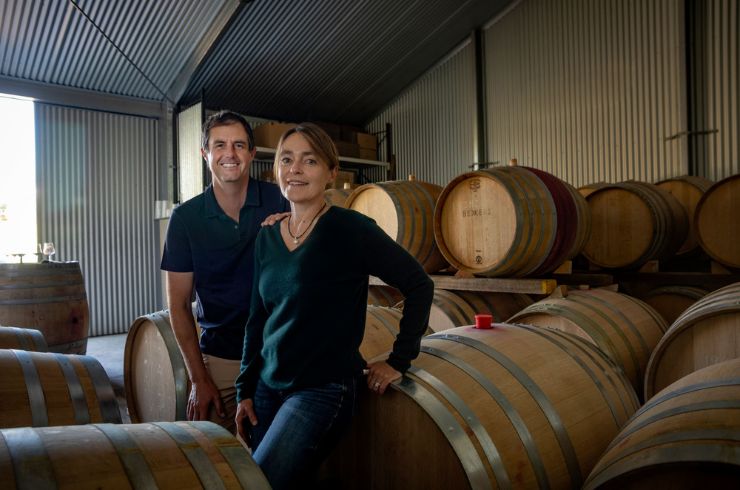
“Why can't we, in Australian farming, when people graduate from ag college, viticulture or winemaking, or whatever, sign up to something like the medical practitioner's code of doing no harm?” says Richard Wellsmore, vineyard manager at Maxwell Wines in McLaren Vale and a staunch advocate for genuine regenerative and sustainable farming. “If our universities were punching out students with that ethos right from the start, then maybe these chemical manufacturers would need to change gear.”

Syngenta is the world’s largest single producer of paraquat, founded and based in Basel, Switzerland, but now owned by Sinochem, a state-controlled company of China. Their sole production facility is in Huddersfield, UK. Those three countries banned domestic paraquat use in 1989, 2007 and ’17, respectively, yet they are responsible for supplying much of the paraquat to the world, with the largest markets in the Americas.
It’s somewhat arresting that corporate, finance and production are all based in countries that have long banned paraquat due to human health concerns, based on its well-established history of acute poisonings and highly toxic effects on all organs and human systems, as well as its strong epidemiological link to central nervous system damage and an increased risk of Parkinson’s disease, with a 1985 Canadian study finding “an extraordinarily high correlation” between Parkinson’s and paraquat.
“Australia is a dumping ground,” says Dr Mary Cole, Director and Principal Scientist at AgPath, and a force of, and for, nature. “For 45 years, my career has been about taking synthetic chemistry out of agriculture around the world. I have great growers all around Australia, New Zealand, France, who have never had to use any of these sorts of chemicals.”

Glyphosate has a similarly checkered history, with a strong link to non-Hodgkin lymphoma (NHL). That evidence is controversial, with industry-funded research declaring it safe if instructions are followed. However, the regulatory bodies of the United State (EPA) and European Union (EFSA) have been criticised for relying on unpublished and non-peer-reviewed studies in forming regulations.
In Australia, the risk must be definitively established, and even with compelling epidemiological studies on NHL links – as with paraquat and Parkinson’s – they can never confirm causation, so it retains its APVMA approval. “It's a known carcinogen for non-Hodgkin lymphoma,” adds Richard. “They're finding glyphosate in embryos now, in unborn babies. They're finding it, along with microplastics, in the human brain.”
Bayer bought Monsanto in 2018, who originally produced and patented glyphosate, selling it as Roundup. That patent has expired, but Bayer is still the largest producer of glyphosate. There have been over 100,000 civil lawsuits settled by Monsanto/Bayer, with over 60,000 pending, in the US alone.
A French study published in 2022 tested nearly 7000 participants to simulate a cross-section of the public. Urine samples revealed detectable levels of glyphosate in 99.8 per cent of participants, with generally higher levels in men and children, and, unsurprisingly, the highest in farm workers. There have been several similar studies in the USA on pregnant women, with similarly high results.

The question remains: are these synthetic pesticides necessary at all? “These chemicals are destructive on every level, and they should be banned totally,” Mary says. “The only reason these weed species arrive is because of damage to the soil, to the microbiology. The diversity of microbiology maintains the plant health and the health of the soil. And therefore, these potential pests and diseases are not a problem. Conventional agriculture is totally destructive; it's not sustainable.”
Where paraquat differs from glyphosate is that it is a non-residual herbicide, while glyphosate is systemic and residual, taking time to break down in the soil and, in certain conditions, leeching into waterways. Paraquat is denatured by contact with the soil, bonding to clay and organic matter. It is also degraded by sunlight, making it appear to have meaningful advantages over residual herbicides, but the elevated danger for the user, as well as the damage to animal and insect life, is significant.
An argument for herbicides like glyphosate and paraquat is that it means you can practice no-till farming, leaving soil carbon stores in the ground, and in the case of paraquat – but certainly not glyphosate – leave soil biology intact. “I'm very minimalistic in our approach to viticulture,” says Richard. “We're using sheep and under-vine dodging. We're feeding worm juice and humates and kelp through our drip line, fertigating prior and post dodging. If you've got a healthy soil generally, mid row and under vine, the damage to your under-vine area through cultivation is going to be minimal.”
Pesticide residue, and especially a cocktail of pesticides, has been proven as a contributing factor to significant bee colony die-offs around the world. In 2024–25, up to 60 per cent of commercial bee colonies were destroyed in the USA. Neonicotinoids (also approved for use by the APVMA in agriculture, including vineyards) are the main culprits, but the evidence points to a variety of synthetic pesticides increasing the lethality to bees by weakening their systems, as well as making them easier targets for parasites.

“These chemicals are diabolically dangerous for the soil and for human health, and for bees and frogs and things,” says Mary. “And they're unnecessary if one just cares for the soil. It's like putting a band-aid on. You can continue to put as many band-aids on as you like. The problem doesn't go away. But if you change your soil biota and the way you manage your soil, you don't need the band-aid.”
As Richard points out, Australian farmers are not subsidised like those in the US and Europe and must accept the farm gate price or what is dictated by the supermarket monopolies, and grape growers are no less at the mercy of an increasingly difficult market. Unless there is an incentive to farm without synthetics, many see little choice. “There's [currently] a need for chemicals for some people, and I get that,” he says. “I don't think those people should be held out to be crucified.”
And while Mary’s resolve is incandescent, her sympathies lie very much with farmers who have been wedded to a chemical regimen. “I have three or four thousand farmers that I work with in Australia,” she says. “And that's not even counting the ones around the world. They'll phone up and say, ‘Mary, talk to me. Tell me’. And then they'll say, ‘what can I do?’ And I say, ‘just stop using chemicals, and I'll give you a program’. And they do. And they save money.
“I have a lot of workshops here, and I always ask people why they're here,” she continues. “And they want to reduce synthetic chemistry, they want to improve productivity, etc. There was one older gentleman, and it's the older people often that you can't get to because they've always done it that way. When I got to this gentleman, I said, ‘Peter, why are you here?’ And he looked at me, and his eyes welled, and he said, ‘Mary, I've got grandchildren’. That's all he said, and everybody gave him a clap. He didn't have to say anything else.”
– As something of a postscript, Syngenta announced in March 2026 that it would cease production at Huddersfield by the end of June 2026, though this was far from pressure around human health, but rather a more predictable concern: economics. As per the Syngenta website: “The decision reflects significant competition from generic producers around the world, which has eroded Syngenta’s competitiveness in the production of this herbicide.”
Subscribe to the Halliday Wine Companion Podcast
Hear from some of Australia's top winemakers and industry professionals as they share their stories and insights on the Halliday Wine Companion Podcast. Listen here, or on your usual podcast platform, and remember to rate, share and subscribe so you never miss an episode.
Latest Articles
-
From the tasting team
Jane Faulkner on what makes Kerri Thompson’s Peglidis riesling so special
12 hours ago -
News
Wantirna Estate goes on the market after more than six decades in family hands
15 hours ago -
Wine Lists
Toast International Champagne Day with these six expressions
1 day ago -
Wine Lists
Ten red wines perfect for summer drinking
2 days ago


More from Marcus Ellis on sustainability
-
From the tasting team
High flying, low impact: Marcus Ellis on the producers using drones to manage their vineyards
14 Apr 2026 -
From the tasting team
Sustainable and beyond: Marcus Ellis on sustainability in the wine industry
8 Mar 2026 -
From the tasting team
Future Perfect: Marcus Ellis looks at what lies ahead for McLaren Vale
24 Sep 2025